Seasickness happens when your eyes, inner ear, and body send your brain different messages about motion. A boat can rise and roll while your eyes focus on a fixed seat or cabin wall. The result may be nausea, sweating, dizziness, headache, or vomiting. You can reduce the risk by preparing before boarding and choosing a trip that matches your tolerance for motion.
Take prevention medication before the boat moves
Seasickness medicine works best before symptoms begin. Take an antihistamine tablet at least one hour before boarding, or ideally the night before if the product instructions allow it. Starting after nausea begins is less reliable. Read the label carefully because some tablets cause drowsiness. Do not mix them with alcohol, and ask a pharmacist or doctor about interactions with your other medicines.
Prescription patches are different from over-the-counter antihistamine tablets. A patch is prescribed and usually placed ahead of the trip according to medical instructions. It may not be suitable for everyone and can have side effects. Discuss your medical history with a clinician before using one. Never borrow someone else's prescription patch or combine products without professional advice.
Use ginger and acupressure as low-risk options
Ginger may help some people with mild nausea. You can try ginger tea, chews, or capsules if you already know you tolerate them. Acupressure bands are another low-risk option. They apply pressure at a point on the wrist and do not make you sleepy. These choices are not guaranteed treatments, but they can be part of a practical plan.
If you are pregnant, take blood thinners, have a chronic condition, or use regular medication, ask a healthcare professional before taking concentrated ginger or any motion-sickness product. A low-risk option is not the same as an option that is right for every person.
Eat lightly, drink water, and avoid common triggers
Eat a small, familiar meal before the trip. Plain toast, crackers, rice, bananas, or another food you digest easily may be more comfortable than a heavy breakfast. Avoid boarding on an empty stomach if that makes you weak, but also avoid greasy, spicy, or very large meals. Skip alcohol before and during the trip.
Drink water in small amounts. Dehydration can make a headache and nausea feel worse, while drinking a large amount quickly may upset your stomach. Bring a simple snack for the return ride if the operator permits it. Tell the crew early if you start feeling unwell. They can help you move to a better position and can explain the next safe step.
Choose the most stable place on the boat
Sit near the middle of the boat, close to the waterline, where movement is usually less pronounced than at the bow, stern, or upper deck. Stay in fresh air if conditions allow. Look at the horizon rather than reading, watching a phone, or staring into the cabin. Keep your head as still as you can and face the direction the boat is moving.
Some people feel better lying back with their eyes closed, while others need to keep looking outside. Test what helps you before symptoms become strong. Keep a bag within reach and avoid embarrassment about using it. Seasickness is a physical response, not a failure of willpower.
Pick a trip that matches your motion tolerance
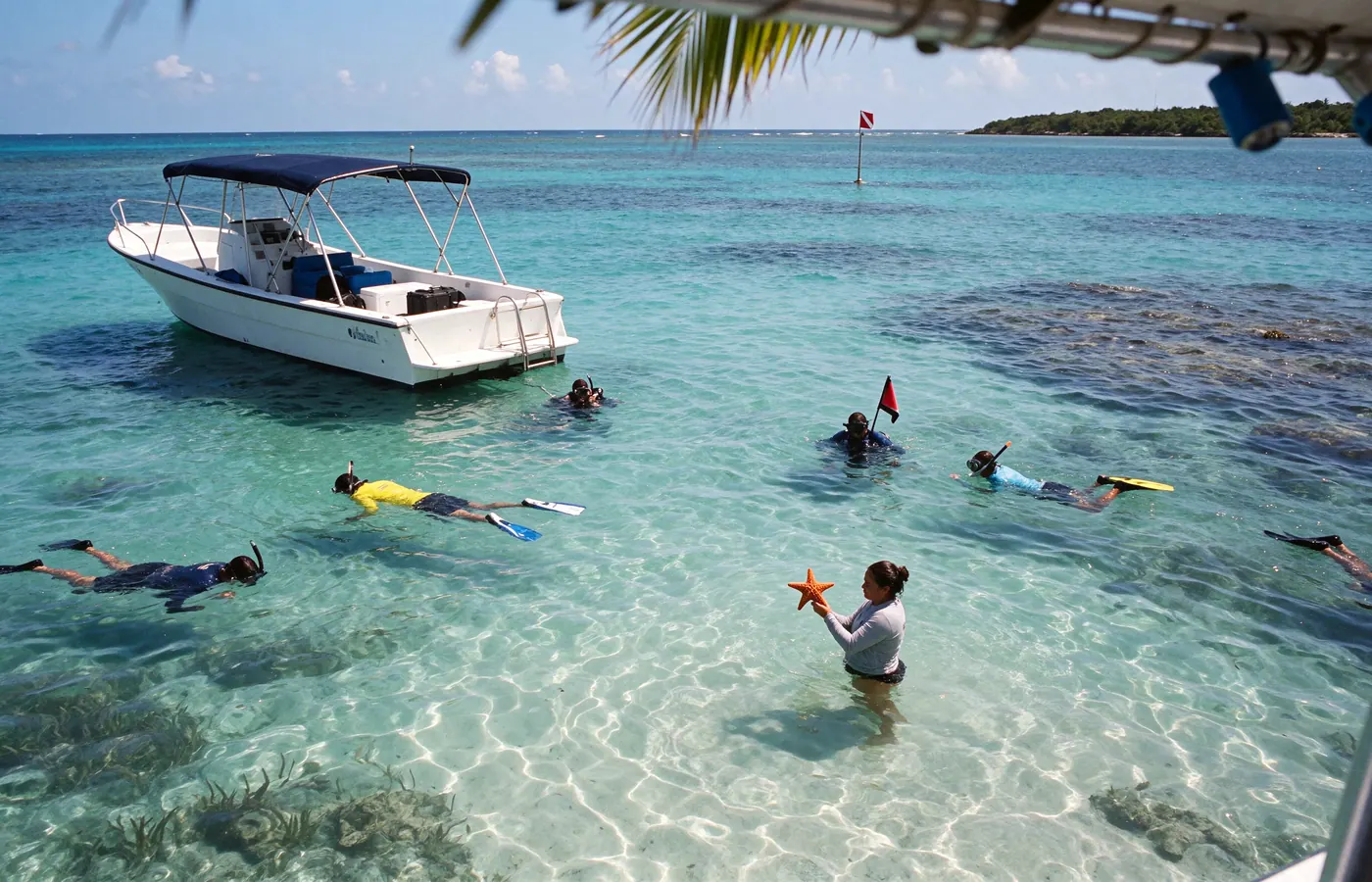
The calmest choices are trips that stay on land. A beach snorkel and a shore dive at Chankanaab do not require an offshore boat ride. They let you enter and exit from the park, so they may suit you if boat motion is your main concern.
If you want a boat experience, a snorkel trip inside the reef line is generally calmer than an offshore dive trip because it is more protected from open-water movement. Conditions still change with wind and sea state. Ask about the forecast and expected ride before you book. A calmer route can reduce exposure to motion, but no boat trip can promise perfectly flat water.
Know when to stop and when to seek medical advice
If you feel sick, tell the crew promptly. Sit or lie in a safe place, look at the horizon, breathe slowly, and take small sips of water when you can. Do not enter the water if you are dizzy, weak, confused, or unable to follow instructions. Seek medical help for trouble breathing, chest pain, fainting, severe dehydration, blood in vomit, or symptoms that continue after the trip.
Talk with a doctor before traveling if you have had severe motion sickness, need prescription treatment, or have a condition that affects which medicines you can use. Please also plan with the cancellation policy in mind: a refund is not available for seasickness. Cancellations made seven days or less before departure receive no refund except for a documented medical emergency. That policy can feel difficult when you are unwell, so the kindest approach is to prepare early, choose the gentler trip, and contact the team as soon as a problem develops.