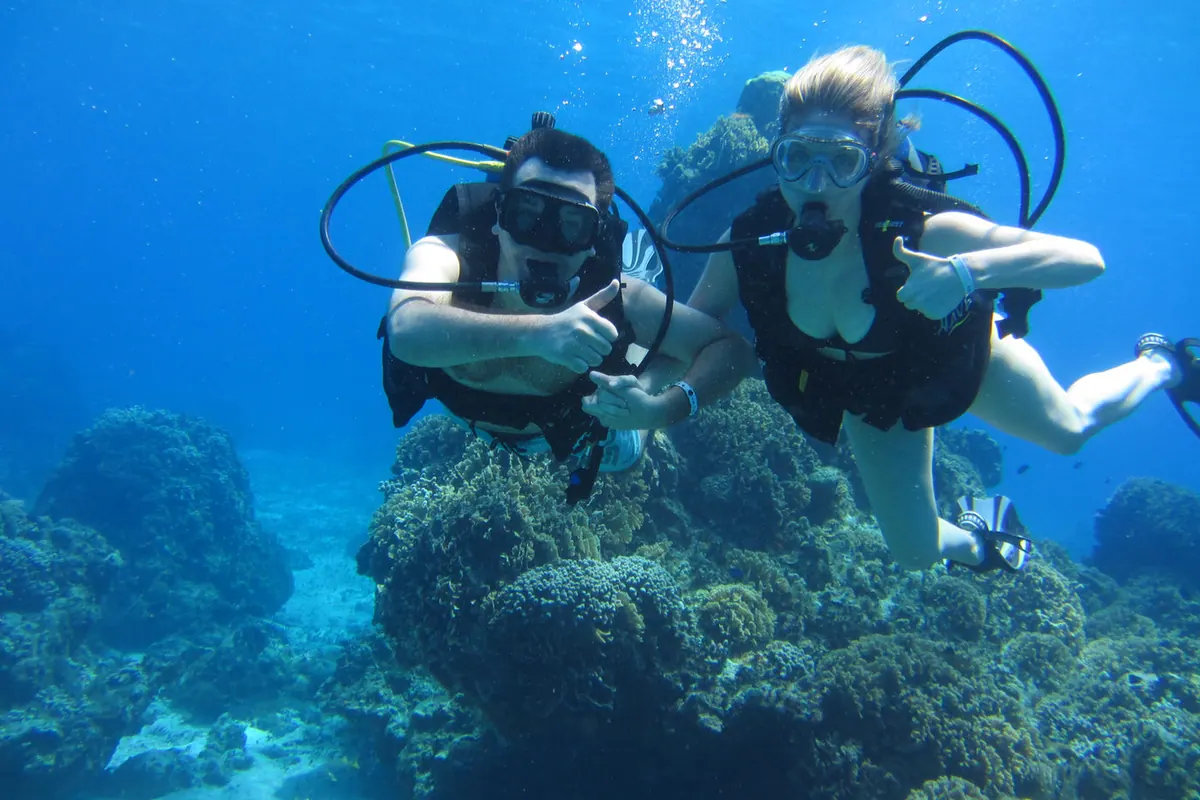
Discover Scuba Diving in Cozumel is a first experience with a real scuba tank, not a shortened certification course. At Aquadventures inside Chankanaab National Park, you learn the basic skills in shallow water, then join a guided dive to about 20 feet past the underwater statues. The pace is deliberate. You have time to ask questions, find your breathing rhythm, and decide how far you want to go.
Minute 0–15: paperwork and the medical questionnaire
Your first step is paperwork and a medical questionnaire. Answer it honestly, including questions about current health, past conditions, and medication. If an answer needs medical clearance, resolve that before entering the water. The form is part of making a sensible plan, not a formality to rush through.
This is also the time to tell your instructor that you are nervous, have never used a regulator, or need an explanation repeated. A first dive goes better when the instructor knows what you are thinking before the mask is on your face.
Minute 15–30: gear fitting and a short briefing
You are fitted with the basic scuba equipment and shown what each part does. Your mask should seal without uncomfortable pressure. Your fins should stay secure. The regulator is the mouthpiece that supplies air from the tank, and the buoyancy device helps you control your position in the water.
The briefing covers hand signals, breathing, equalizing, and what to do if something feels wrong. Scuba breathing is steady and normal. You do not hold your breath. Your instructor also explains how to signal “okay,” “up,” “down,” “stop,” and “problem.” These signals are the conversation you use underwater.
Minute 30–60: the shallow-water class
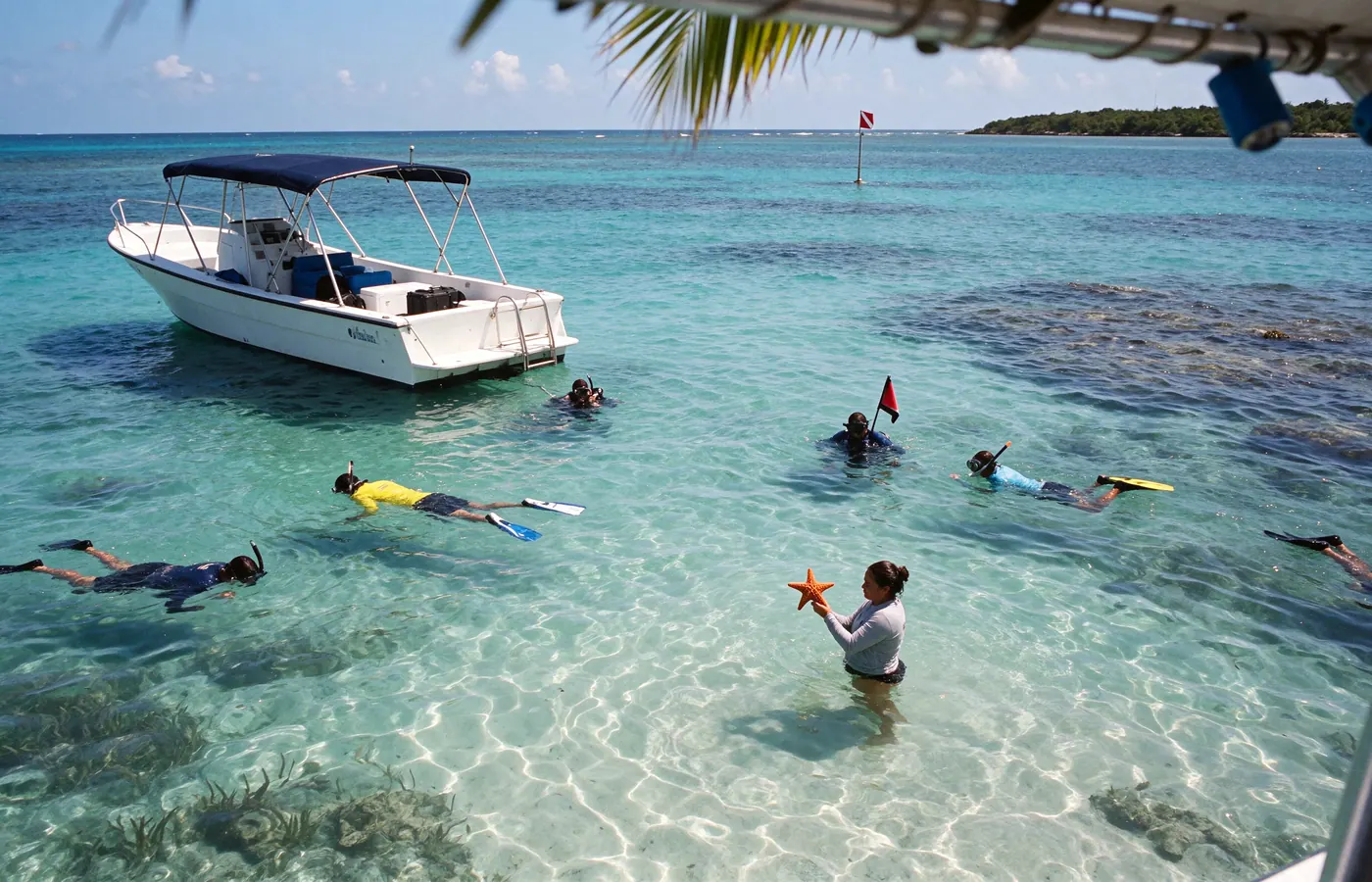
About 30 minutes are spent in shallow water practicing the skills before the guided dive. You put your face in, breathe through the regulator, and learn how it feels to stay at the surface with the equipment. You practice clearing water from the mask, finding the regulator if it moves, and using hand signals.
The first breath often feels strange because your brain expects air to come from above your face. Take a slow breath, look at your instructor, and repeat the signal that you are okay. If you need a pause, signal stop. There is no prize for moving faster than your comfort allows.
Minute 60–75: entering the reef and taking the first breath
Once you are ready, you enter the water with your instructor. The first minutes are about settling your body, not sightseeing. Keep your breathing slow. Let the instructor help you find a comfortable position. Equalize early and often as you descend. Pinch your nose gently and use the method you were shown. Never force an equalization. If your ears do not clear, signal and ascend slightly with help.
After the first few minutes, the equipment starts to feel less foreign. You notice the sound of each breath, the movement of your fins, and the way a small change in breathing affects your buoyancy.
Minute 75–120: the guided dive to about 20 feet
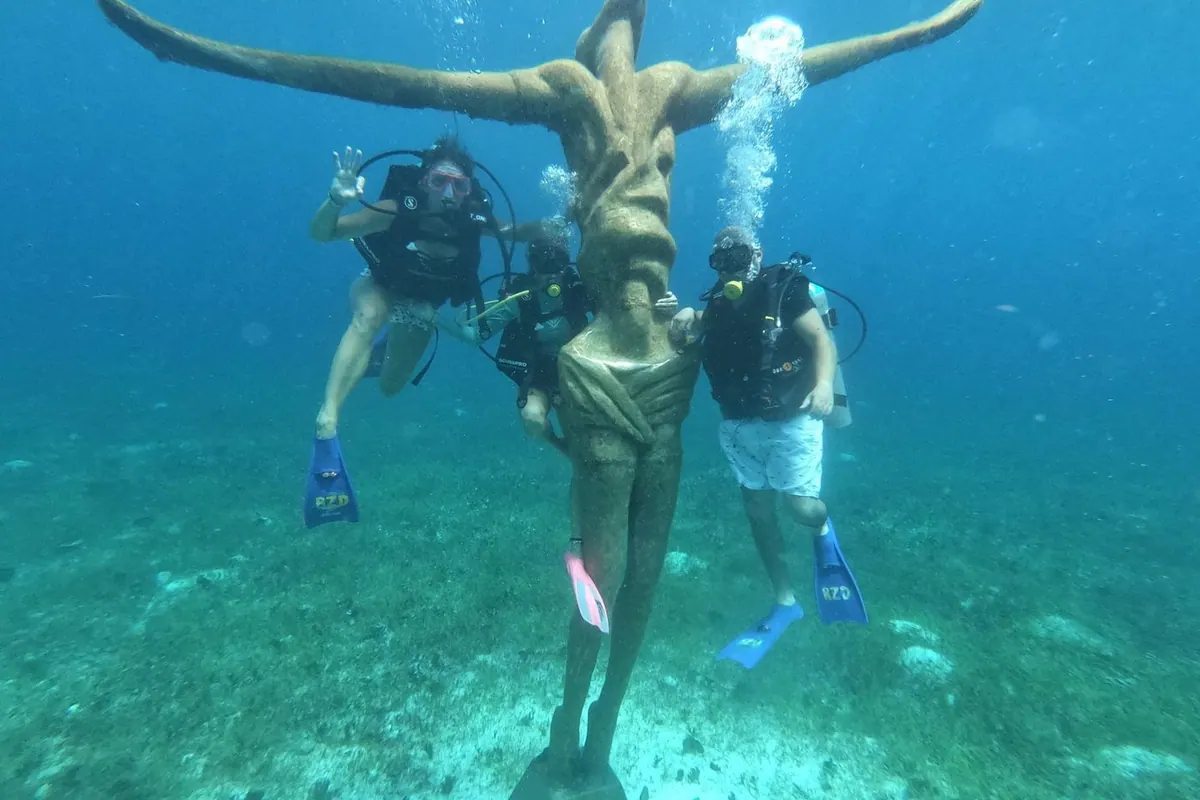
The guided dive reaches about 20 feet and passes the underwater statues at Chankanaab. The bronze Virgin of Guadalupe, a Christ statue, Spanish cannons from a wreck, and a replica of the Mayan rain god Chaac sit in the reef area around that depth. You do not need to swim quickly to see them. Stay beside your instructor and use the hand signals when you want to check in.
You are actually underwater for about 40–50 minutes, depending on the pace of the group, your breathing, and the plan for the dive. The rest of the visit includes preparation, instruction, entry, and returning to shore. A longer visit does not mean a longer underwater time; your instructor decides the safe profile.
If you panic, signal and return to the basics
Panic can happen when a mask leaks, a regulator feels unfamiliar, or the water suddenly seems large. Your first action is to signal your instructor. Stop moving, breathe from the regulator, and look at the person guiding you. Your instructor can steady you, help with equipment, and bring you shallower or back to the exit. Do not bolt for the surface or remove the regulator without guidance.
If you are not ready to continue, ending the dive is a valid decision. The goal is a controlled first experience in which you understand what your body and equipment are doing.
What to wear and how the dive counts toward Open Water
Wear a swimsuit and bring a towel, dry clothes, and a UV shirt if you have one. Sunblock is banned in the water inside Chankanaab because of coral protection, so plan on clothing and shade instead. You will use the dive center’s scuba equipment as directed by the instructor.
Discover Scuba Diving does not certify you, but the training can count as credit toward an Open Water course when the instructor and certification program accept the skills you completed. Ask how your session will be documented before you begin. Your instructor can explain which parts transfer and what additional knowledge, confined-water practice, and open-water dives are still required.