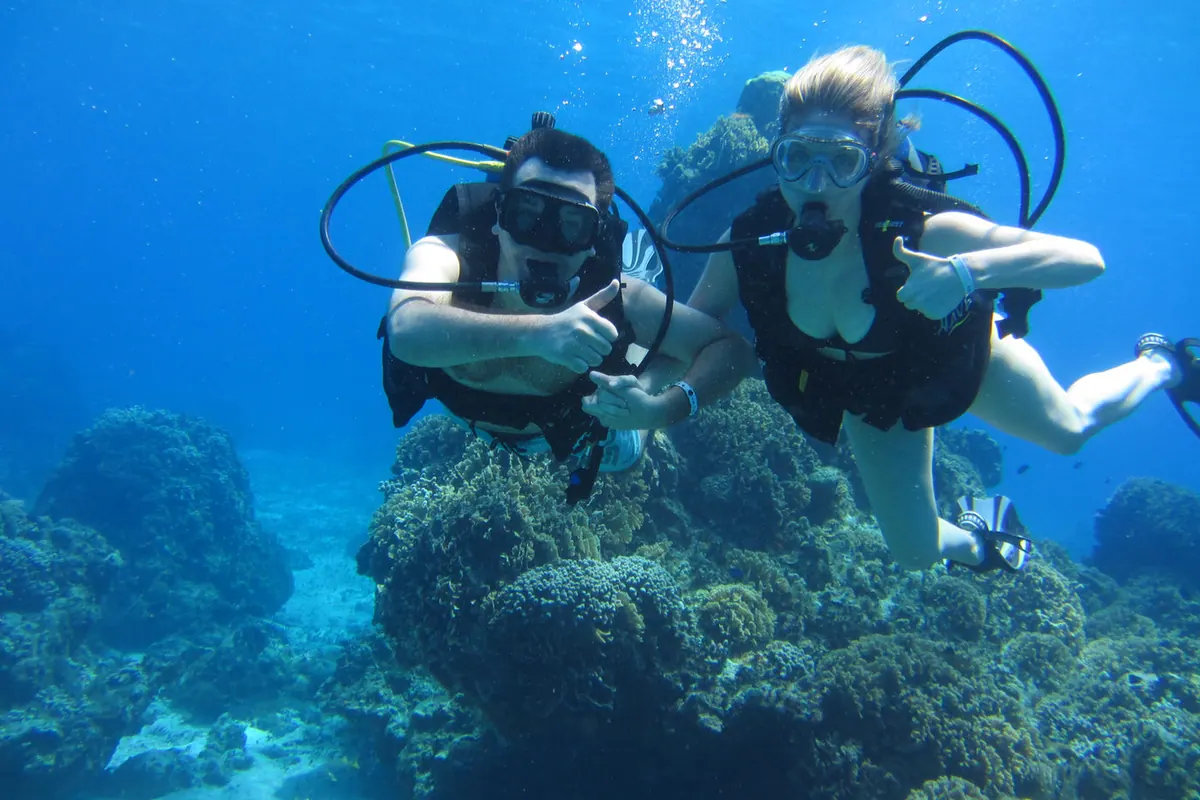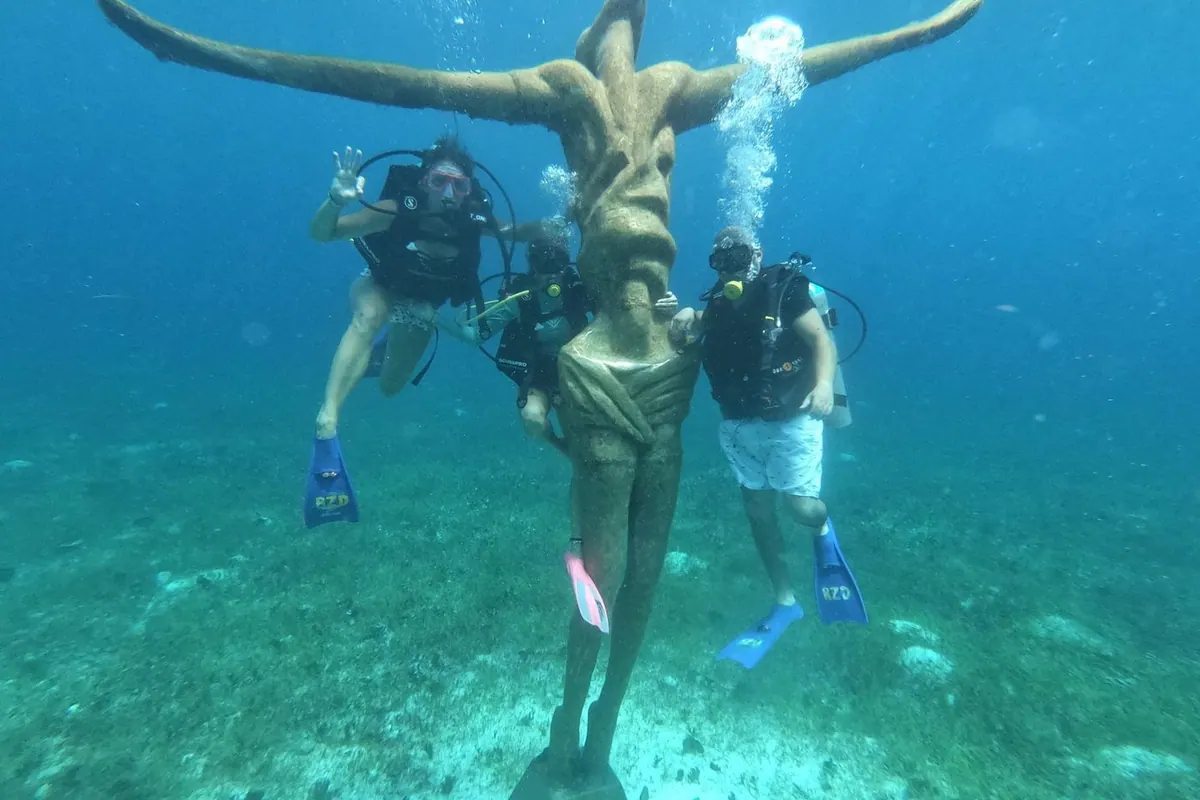
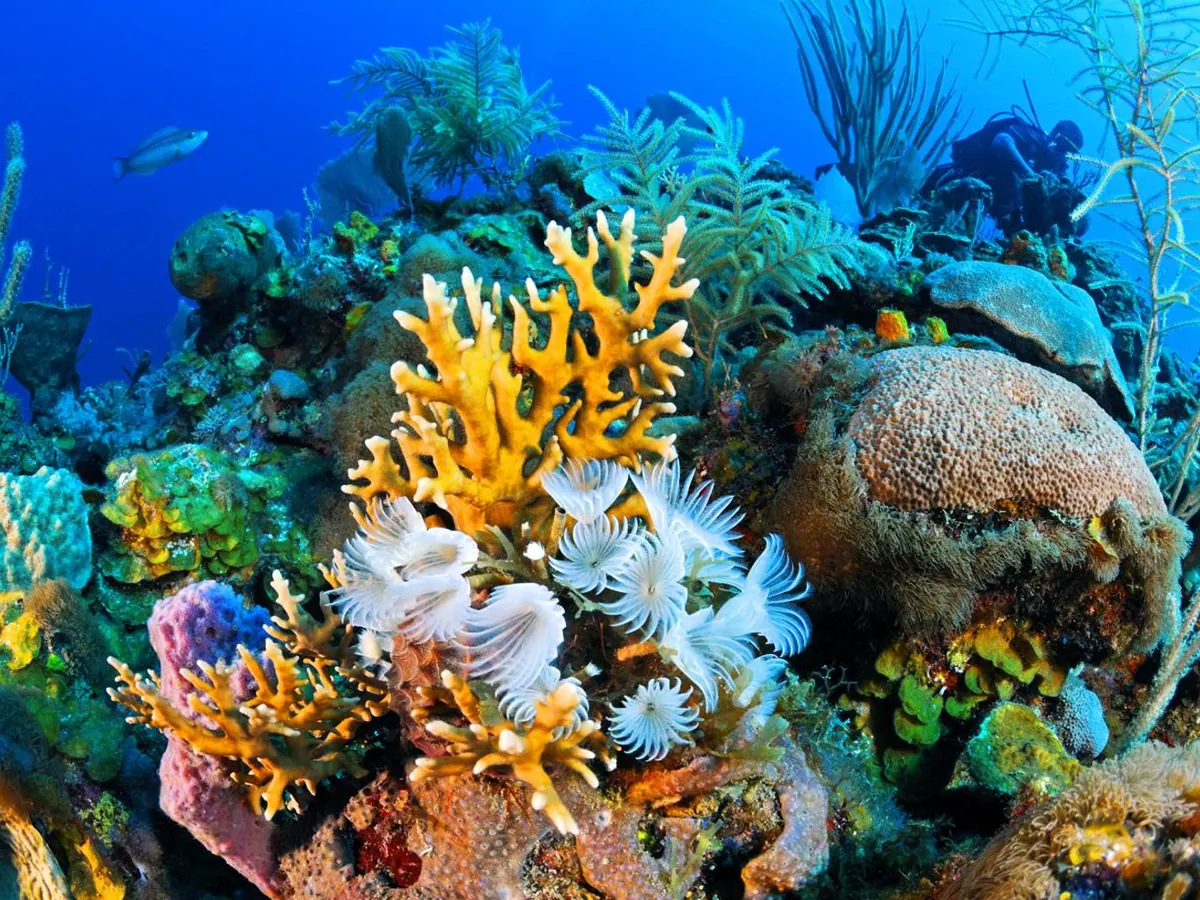
Cozumel reef diving puts you inside the Mesoamerican Barrier Reef system, where a short swim can move from coral structure to open blue water and back again. The reef is not an aquarium with fixed appointments. What you see depends on the site, season, depth, current, and the time you spend looking. Slow breathing and good buoyancy give you more chances to notice the animals living among the coral.
The reef is built from coral, fans, and sponges
Brain coral forms rounded ridges that resemble a maze. Sea fans spread into the current like flexible screens. Elkhorn coral creates branching shelter, while sponges add bright, irregular shapes to the reef surface. These forms give small fish places to hide and give larger animals edges to patrol.
Look closely instead of swimming past. A coral head can contain several scenes at once: a fish picking at its surface, a moray eel tucked into a crack, and a sponge growing beside a fan. Keep your hands and fins clear. Touching living coral can damage the animal and disturb the small creatures using it.
Parrotfish help shape the reef
Parrotfish are easy to recognize by their strong beak-like teeth and bright colors. They scrape algae from hard surfaces as they feed. That grazing helps keep algae from covering the reef, and the material they process contributes to the sand around tropical reefs. Watch for the repeated bite, pause, and turn as a parrotfish works across coral.
Give them space. A fish that changes direction sharply is telling you that your distance is too close. You do not need to chase an animal to see its behavior. Hold your position, keep your exhalation controlled, and let the fish continue its route.
Angelfish, snapper, and moray eels occupy different spaces
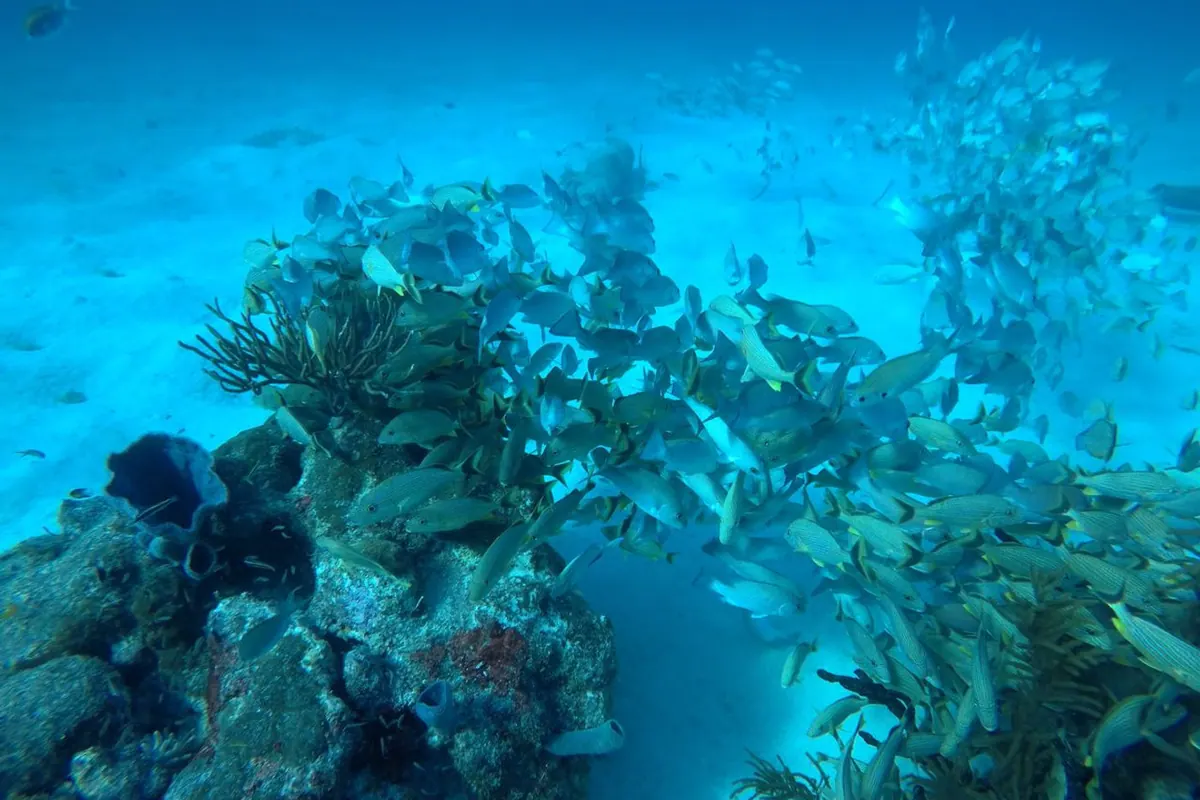
Angelfish often move around the reef face, where their narrow bodies can slip between coral forms. Snapper may gather in open water or hold near structure, turning together when the current shifts. Moray eels prefer cracks and holes. You may see only the head and the steady opening and closing of the mouth, which helps move water across the gills.
Do not put your fingers into a crevice or use a pointer to make an eel emerge. The best view comes from a respectful distance and a light that is aimed beside, not directly into, the animal’s face.
Sea turtles graze on the shallower reef
Green and hawksbill sea turtles pass through Cozumel waters. Green turtles may graze on the shallower reef, while hawksbills use their narrower beaks to feed around reef structure. A turtle may look relaxed, but it still needs a clear path to the surface.
If you see one, stop your forward motion and keep a respectful distance. Never touch, block, or follow a turtle for the entire dive. Let it choose the direction and keep your breathing quiet so your bubbles do not become a constant disturbance.
Eagle rays and nurse sharks bring open-water movement
Eagle rays can pass through seasonally, with cooler months offering a chance to look for them in open water. Their pointed wings and long tails make them easy to identify when they glide beyond the reef. The sighting is never guaranteed, so scan the blue without abandoning your buddy or guide.
Nurse sharks also occur in the region. If one appears, watch from the distance set by your guide and do not attempt to attract it. A calm diver is easier for wildlife to ignore and safer for the group to manage.
Buoyancy is your reef-protection skill
Good buoyancy keeps your knees, fins, tank, and hands away from coral. Adjust your position with small breaths and controlled fin movements. If you feel yourself sinking, do not reach for the reef. Add the correction your instructor taught you and move into open water while you regain control.
Stay aware of your bubbles, gauge, buddy, and guide. Drift diving means the reef moves beneath you, so a diver who stops to photograph an animal must also keep track of the group. Signal before you stop, leave room for other divers, and avoid stirring sand into a coral passage.
Chankanaab rules protect the reef and its visitors
Inside Chankanaab National Park, sunblock is banned in the water because of coral protection. Use a UV shirt, shade, and other non-chemical sun protection instead. The park’s buoyed snorkel zone runs from under 9 feet to about 30 feet, with an average depth of about 20 feet, so snorkellers and divers may share the same reef area.
Do not stand on coral, collect shells, feed fish, or touch wildlife. Move slowly, listen to your guide, and leave the reef as you found it. The more carefully you dive, the more of the reef’s actual behavior you are likely to see.