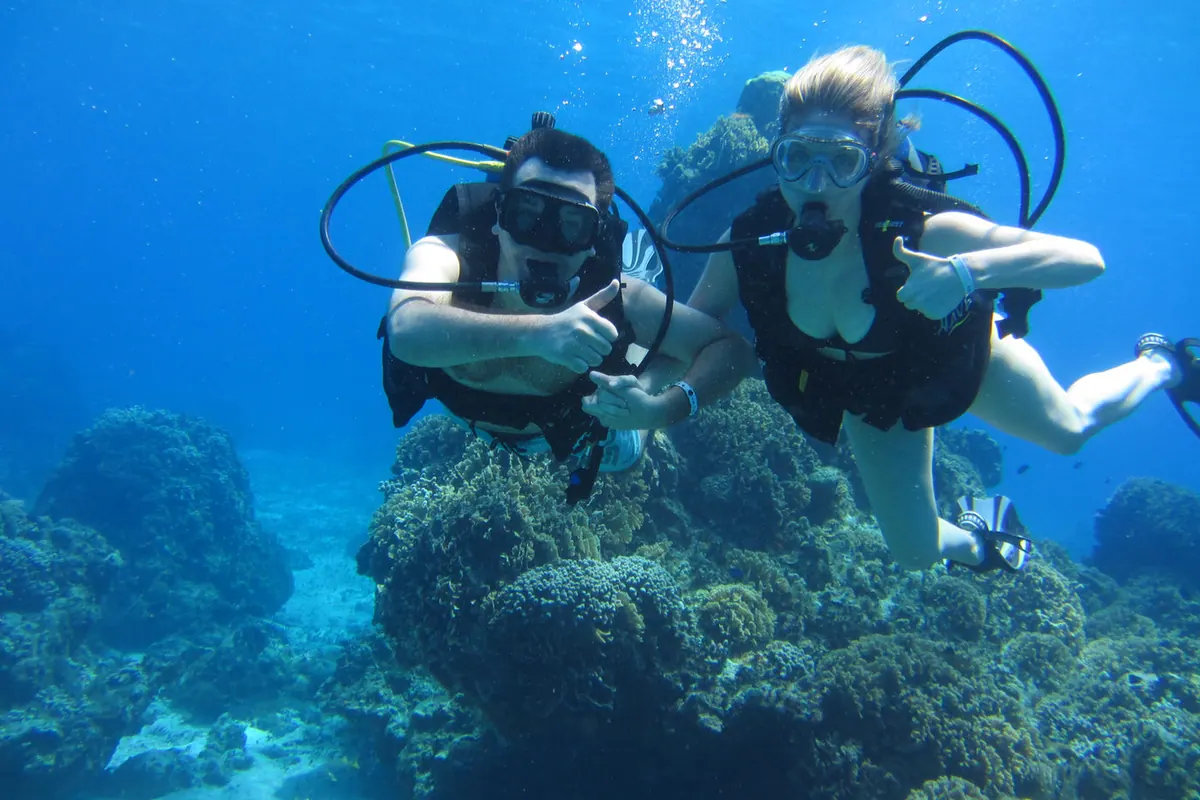
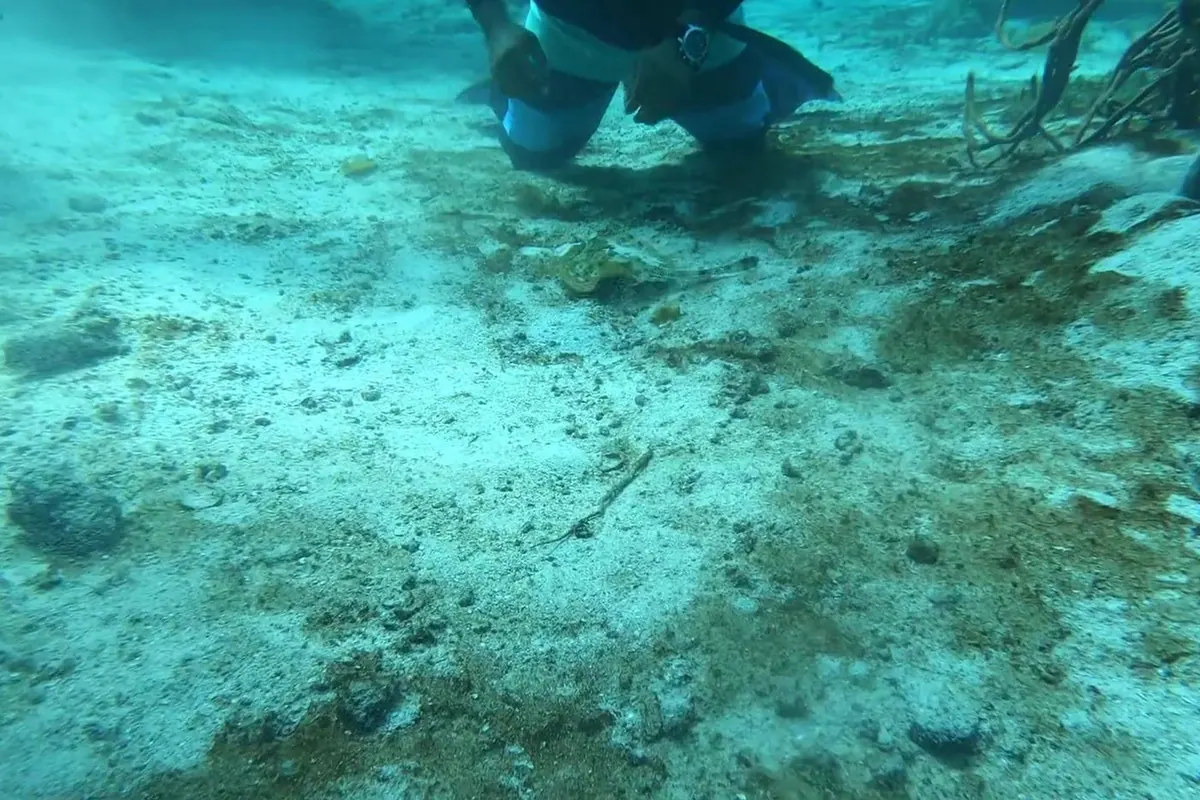
A Cozumel dive day works best when you plan around the current, your surface intervals, and the time you have on the island. Most Cozumel diving is drift diving: the boat drops you upstream of the site, you descend with your group, and you surface downcurrent while the boat follows your bubbles. You spend less effort fighting the water and more time watching the reef.
How Cozumel drift diving shapes your dive plan
Drift diving does not mean being swept away without control. Your guide chooses the entry point, checks the conditions, and sets the pace. You still manage your depth, air supply, buoyancy, and buddy contact. The current carries you along the reef, so the boat does not need to return to the same place where you entered.
Currents can be stronger at points, along walls, and around corners. They are often more noticeable when water is moving through a narrow passage or when wind and tide affect the surface. Treat the current as a condition to assess, not as a fixed schedule. Your guide may adjust the site, route, or time in the water. A relaxed descent, good trim, and a steady kick when needed make the ride easier.
When currents are strongest and what that means underwater
There is no single hour when every Cozumel site has its strongest current. Conditions vary by location, wind, tide, and weather. Ask about the expected current during your briefing, then watch how the water moves at the surface and during your descent. The strongest flow may be along the outer edge of a wall or at a site with a funnel-like shape.
Plan conservatively if you are new to drift diving. Keep your profile streamlined, avoid hanging onto coral, and signal early if you need help. Your guide can position the group where the current is manageable. If you lose the group, follow the operator's lost-buddy and surface procedures rather than swimming hard in a random direction.
Chankanaab shore diving versus offshore boat diving
Shore diving at Chankanaab gives you a simple entry from land and a reef inside the buoyed area. The park reef runs from under 9 feet to about 30 feet, with an average depth of about 20 feet. That makes it useful for a shorter dive, a skills-focused dive, or a day when you want to keep logistics simple. You can rinse off and change at the park instead of boarding a boat.
Offshore boat diving takes you to sites such as Palancar, Santa Rosa Wall, Colombia, Punta Tunich, Maracaibo, or Chankanaab. Boat dives depart at 8:30 and 13:30 Monday through Saturday. The boat gives you access to deeper and more varied sites, but you must allow time for boarding, travel, briefings, and surface intervals. Choose the format that matches your certification, comfort in current, and available time.
Water temperature, seasons, and what to pack
Cozumel water is roughly 78–84°F through the year. It is generally cooler from December through March, so a diver who is comfortable in summer water may prefer more exposure protection in winter. Hurricane season runs from June through November. A forecast can affect sea conditions, departure decisions, and the comfort of the boat ride even when the water is warm.
Bring your certification card, swimsuit, towel, water, and any personal medication. Pack a surface layer for the boat, reef-safe sun protection for areas where it is allowed, and a hat or cover-up. If you own a well-fitting mask, bring it. You can rent other equipment, but personal fit matters most for the mask and exposure protection. Keep electronics and valuables secured between dives.
How many dives, and how long should your surface interval be?
Two dives in a day is a sensible plan for many recreational divers. It leaves room for a proper surface interval, food, hydration, and changing conditions. A third dive may be possible for experienced divers whose training, gas planning, and operator schedule support it, but more dives are not automatically better. Fatigue can affect buoyancy, attention, and decision-making.
Follow the computer or tables you are using for the required surface interval and no-decompression limits. Do not shorten the interval because the boat is ready. Stay hydrated, eat a light meal, and avoid alcohol before diving. After your final dive, allow the appropriate no-fly time before boarding an aircraft; your dive operator can explain the current recommendation for your profile.
Fitting a dive day around a cruise port call
Start with the ship's all-aboard time, not the advertised dive duration. Add time for getting off the ship, reaching the meeting point, check-in, the boat ride, two dives, the return trip, and a buffer for traffic or delays. A cruise guest should tell the operator the exact ship schedule before choosing a departure.
Morning boat dives depart at 8:30, while the afternoon departure is 13:30 Monday through Saturday. Do not book a trip that leaves no margin before all-aboard. If the port closes or your cruise ship does not dock, the cancellation policy provides a 100% refund. Once you are underwater, follow the plan, conserve your gas, and let the boat and guide manage the drift. A well-planned day feels straightforward from the first briefing to the final rinse.