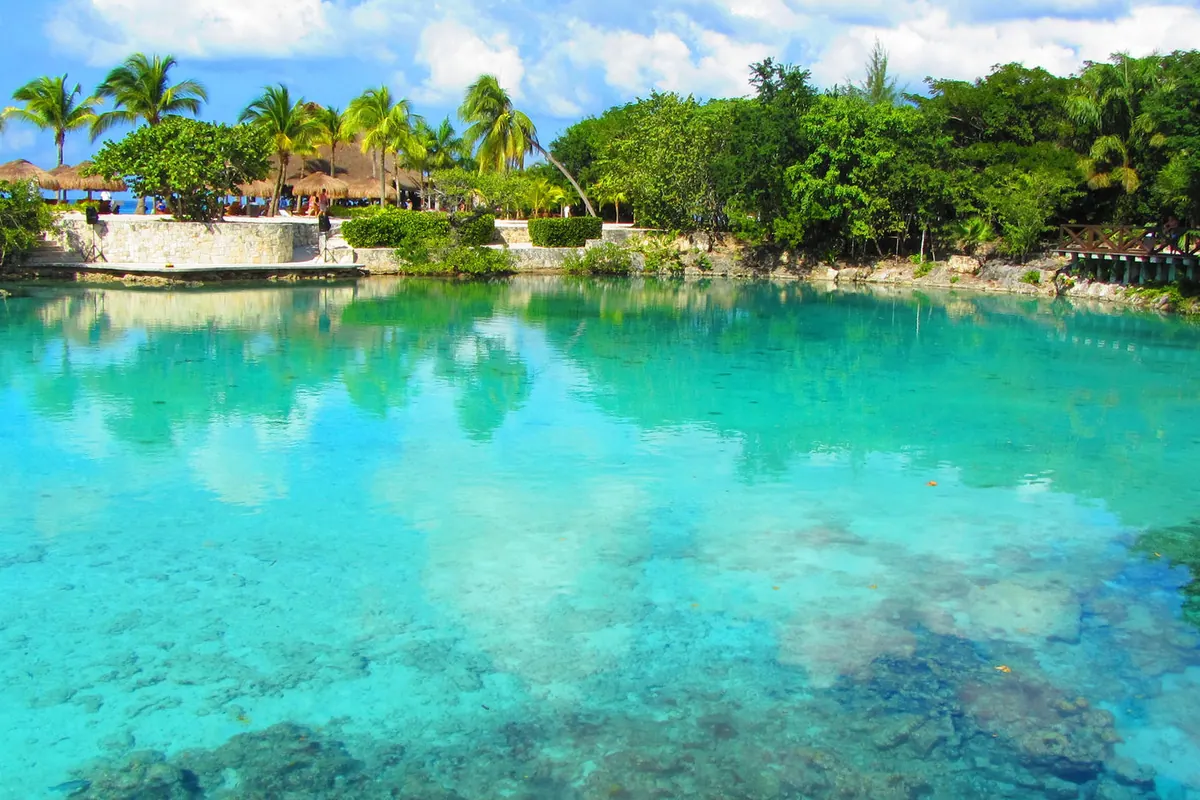
Chankanaab National Park is not just a beach with a reef offshore. The water contains a buoyed snorkel zone, underwater statues, coral gardens, and seagrass where turtles graze. You can snorkel, scuba dive, try Sea Trek helmet diving, or use Snuba. The park is open Monday through Saturday from 9:00 to 17:00 and closed Sunday, so plan your water time around those hours.
The buoyed snorkel zone: shallow water with room to explore
The reef inside Chankanaab's buoyed snorkel zone runs from under 9 feet to about 30 feet, with an average depth near 20 feet. Visibility is usually over 60 yards. Three floating platforms break up the swim and give you places to pause, adjust equipment, or look down before continuing.
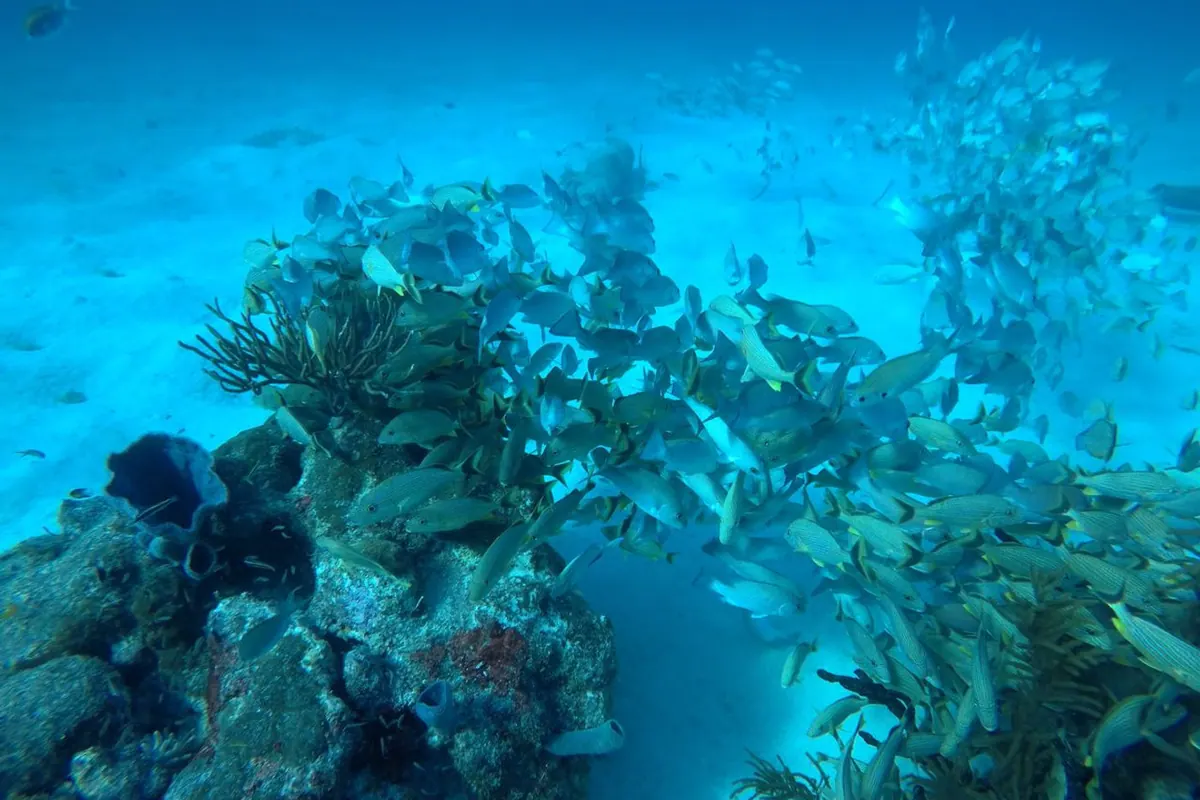
You do not need to be a diver to see structure and marine life here. Enter from the beach, stay inside the marked area, and use the platforms as reference points. The water is deep enough for a real reef swim but close enough to land for a controlled first session. Sea turtles and eagle rays pass through seasonally, so sightings are possible but never guaranteed.
Underwater statues sit along the reef
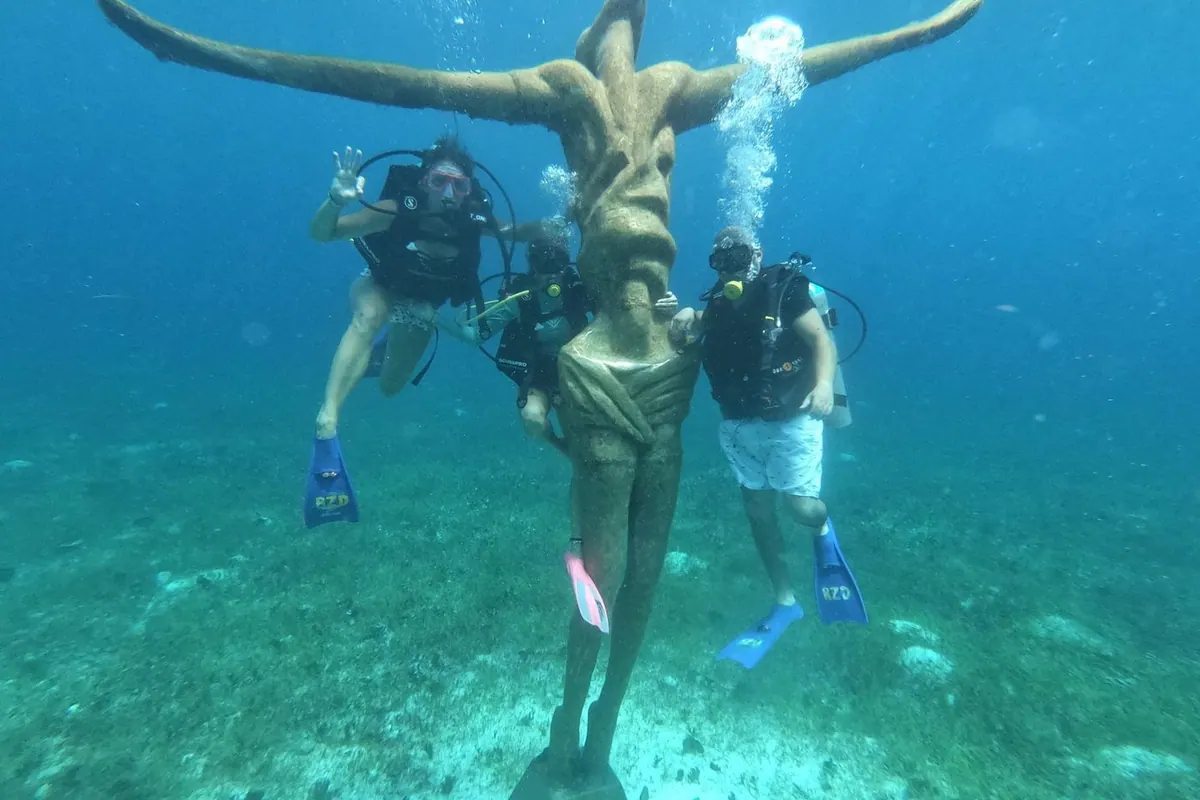
The statue trail gives the snorkel a clear purpose. A bronze Virgin of Guadalupe, sunk by the Zapata family in the late 1970s, rests among other underwater pieces. You can also find a Christ statue, Spanish cannons from a wreck, and a replica of the Mayan rain god Chaac. The statues sit around 20 feet, within the deeper part of the buoyed zone.
Look for shapes that are too straight to be coral. The trail is easier to follow when you move slowly and keep your breathing steady. Do not stand on the bottom or touch the statues. A calm swim protects the reef and gives your eyes time to separate bronze, stone, and living coral.
Coral gardens and seagrass show two reef habitats
Chankanaab's coral gardens have a different texture from the open sandy entry. Branching shapes, hard coral, and small gaps create shelter for fish. Keep your fins up and your body level so you do not brush the reef. Even a light kick can break living coral or stir the water in front of another swimmer.
Seagrass provides another view of the park's underwater life. Turtles graze there when they pass through the area. The grass may look less dramatic than coral, but it is an important feeding habitat. Scan the edges rather than charging across the bed. Give turtles space, avoid chasing them, and let them choose their direction.
The shallow kids area keeps water play close to shore
The park has a shallow kids beach area for families who are not ready for the full snorkel zone. It keeps young swimmers near the sand and makes it easier to take breaks. Parents can use the nearby showers, changing rooms, and restaurants to build a shorter water day instead of committing everyone to a long swim.
Sunblock is banned in the water inside the park to protect the coral. Wear a UV shirt, use shade when you are out of the water, and apply any permitted sun protection according to park instructions. This rule applies even when the water feels cool; the tropical sun is still strong.
Other ways to get underwater at Chankanaab
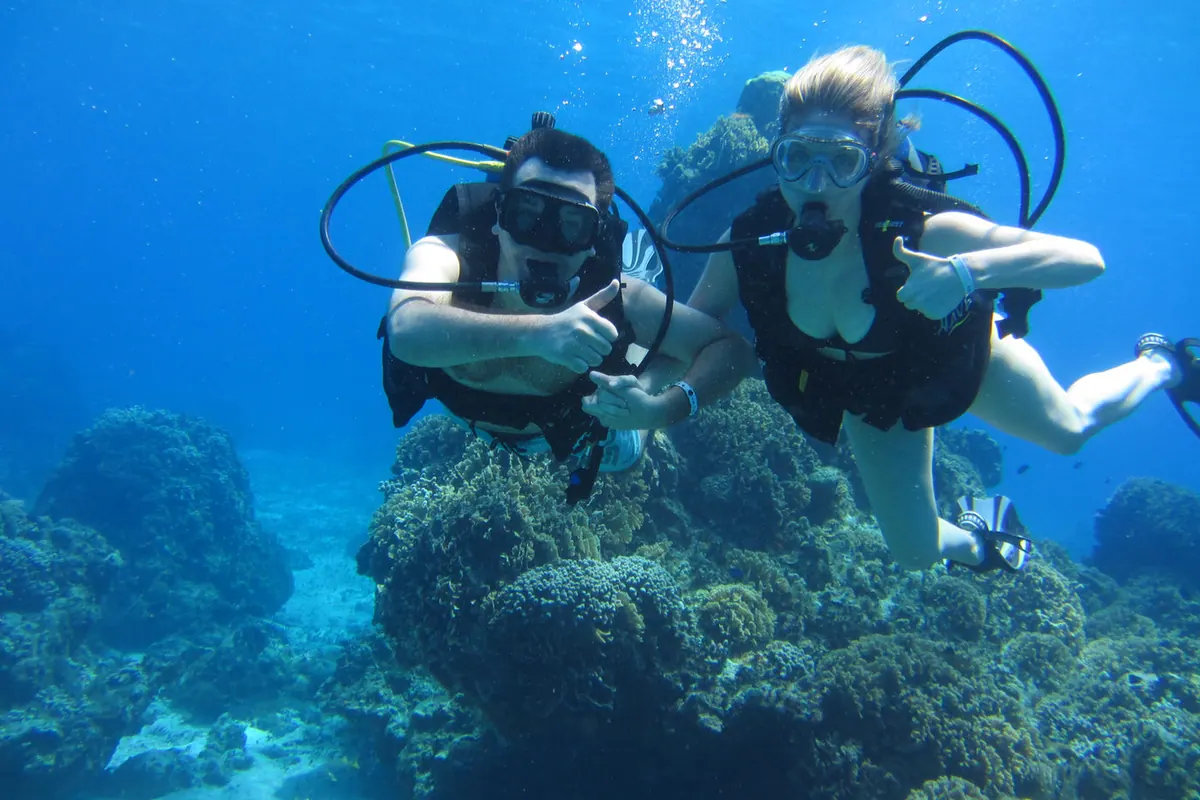
Snorkeling is the most accessible option, but it is not the only one. Scuba lets certified divers spend more time below the surface and explore the reef with a tank. Discover Scuba gives beginners a guided introduction without requiring a certification first; Aquadventures sets the minimum age at 10.
Sea Trek uses a helmet that lets you walk underwater while breathing normally. Snuba sits between snorkeling and scuba, using an air supply while keeping the swimmer connected to the surface system. Ask the operator which activity fits your age, comfort level, and water skills. The Quebrada cave at the south end contains more than 6 miles of underwater tunnels, but cave environments require specialized training and are not a casual snorkel route.
Plan the practical side before you enter
Arrive during park hours, Monday through Saturday, 9:00 to 17:00. Closed Sundays means you need a different plan that day. Bring a swimsuit, a dry change of clothes, and a UV shirt. Showers and changing rooms make it possible to rinse off and continue your day. Restaurants are on site, so you do not need to leave immediately for food.
Start early when possible. The reef is easier to read when you have space around the platforms, and morning water time can help you avoid the busiest cruise-arrival periods. Stay inside the buoyed area, follow staff instructions, and treat every part of the park—statue, coral, seagrass, and shallow beach—as habitat rather than an object to handle.