
Guanacaste Wildlife: What You Will Actually See
Sloths, monkeys, crocodiles and the bird that looks like it was designed by a committee — where to look, and what not to do.
Guide
The animals, and where they live
Guanacaste is dry forest on the coast and rainforest on the volcanoes, which is why a week here can produce both a crocodile and a quetzal. These are the animals guests ask about most, and where we actually find them.
Sloths
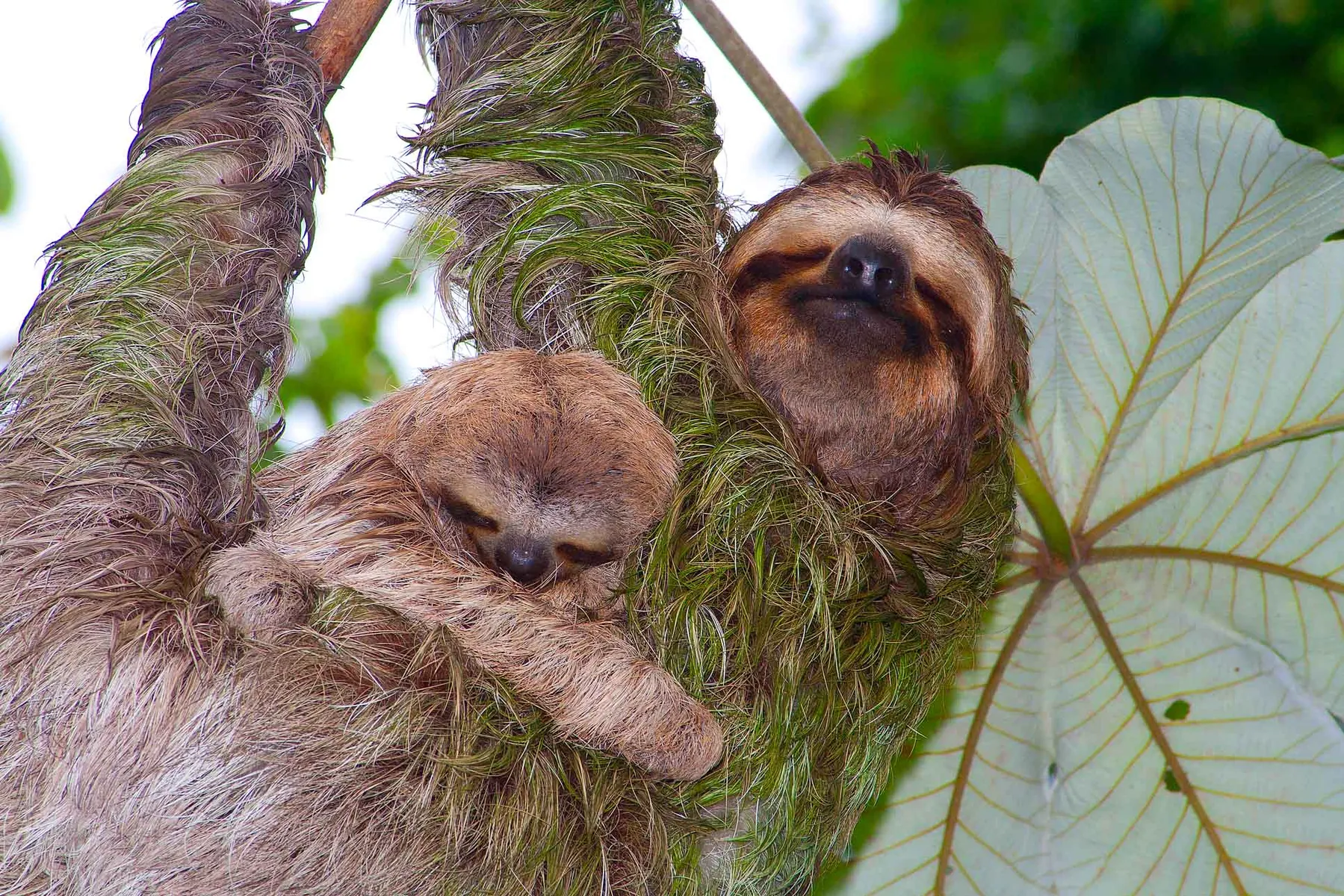
Two species live here: the brown-throated three-toed sloth, which is the one on the calendars, and Hoffmann's two-toed sloth, which is bigger and mostly nocturnal. They favour cecropia trees and the almond trees along the coast, and they move so slowly that the trick is to look for the ball of fur rather than the animal.
You will look for them on the wildlife and chocolate day near Tenorio and at the sloth sanctuary on the Monteverde route. Guides spot them by shape and by the birds that gather around them.
Monkeys
Three species: howler, white-faced capuchin and spider monkey. Howlers you will hear before you see — a troop at dawn sounds like a zoo with the gates open. Capuchins are the ones that will try to take your sandwich, which is exactly why you should not have one out.
Crocodiles
American crocodiles are common in the Tempisque river and the Palo Verde wetlands. From the boat you will see them hauled out on the mud with their mouths open, which is how they cool down. They are not interested in you, and the boat keeps a respectful distance.
Frogs
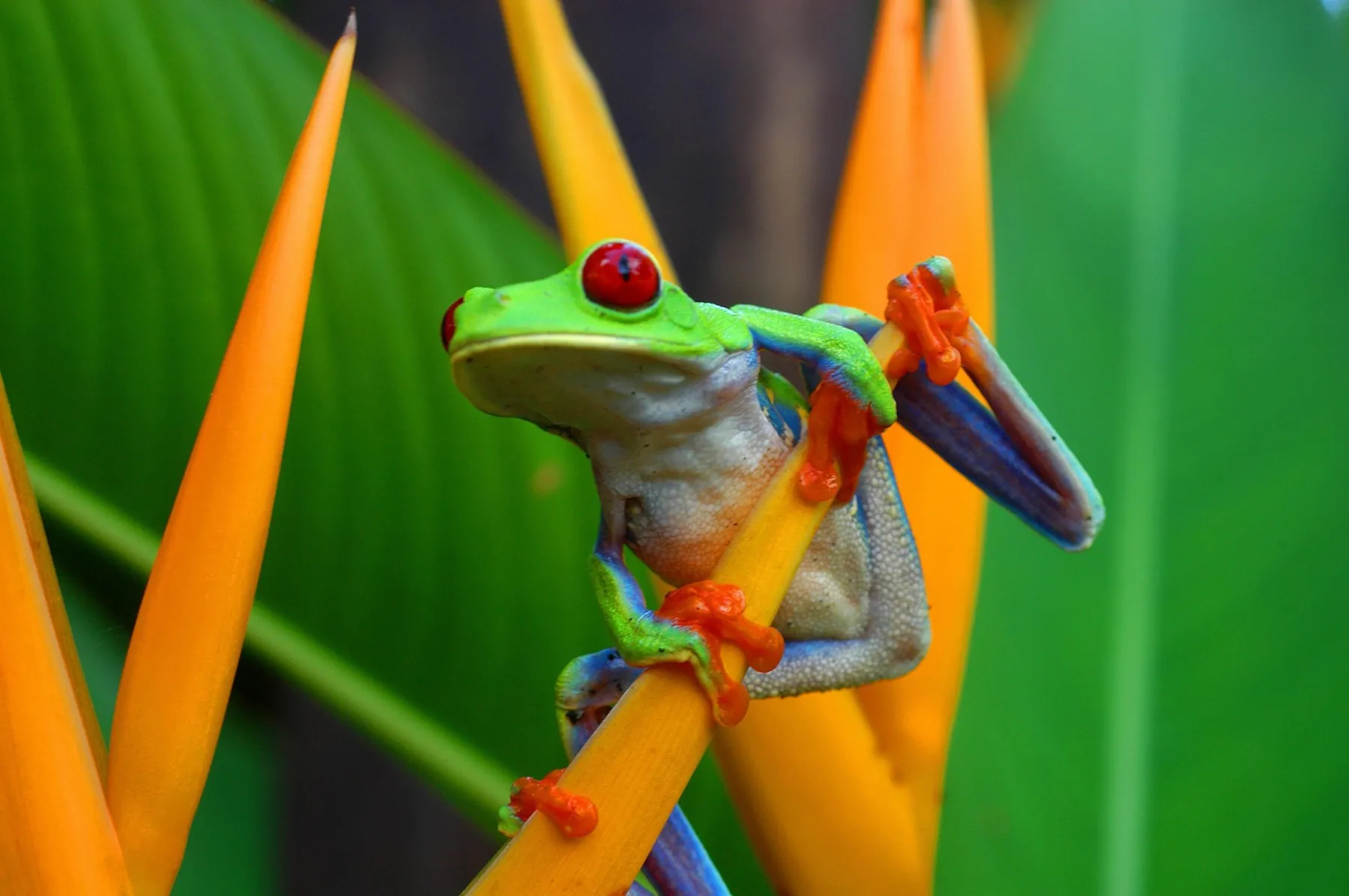
The red-eyed tree frog is the famous one: green body, orange feet, red eyes, and a habit of sleeping on the underside of heliconia leaves. The rainforest below Tenorio is full of them, and a good guide can find one in five minutes at night.
Birds
Toucans, motmots, trogons, herons, egrets, kingfishers, ibis and the jabiru stork, which is the tallest flying bird in the Americas. Palo Verde is the place for water birds; Monteverde is the place for cloud-forest species, including the resplendent quetzal if you are lucky and early.
How to behave around them
- Do not feed anything, ever. Bread is bad for monkeys and worse for birds.
- Do not touch. A sloth that is being handled is a sloth that is stressed.
- Keep your distance and use a zoom. The photograph is not worth the animal's day.
- Stay with your guide. They know where the animals are and, more importantly, where they are not.
Where to go
For variety in one day, the wildlife and chocolate tour is the easiest introduction. For birds and crocodiles, Palo Verde. For cloud forest species, Monteverde. And for something genuinely strange, the bioluminescence tour after dark.
Ready when you are
Go and look for them with someone who knows where
Every wildlife day includes a naturalist guide and a vehicle that can stop when something is worth stopping for.
Or call +506 6235 8103 — a person answers, not a menu.